
Making Passata
It’s August in Florence! It’s been so overwhelmingly hot this year, and even still when Ferragosto comes around I start making my passata. Ferragosto is on the 15th of August, and has roots dating back to Roman times. It’s the Assumption of Mary, and a holiday that is respected throughout all of Italy. It also happens to be a time when many Italians take a two week vacation or if you own a small business you shut down for two weeks or a month. As an American, it kind of reminds of Labor day in the sense that it marks Summer is ending and people get their last vacation in.
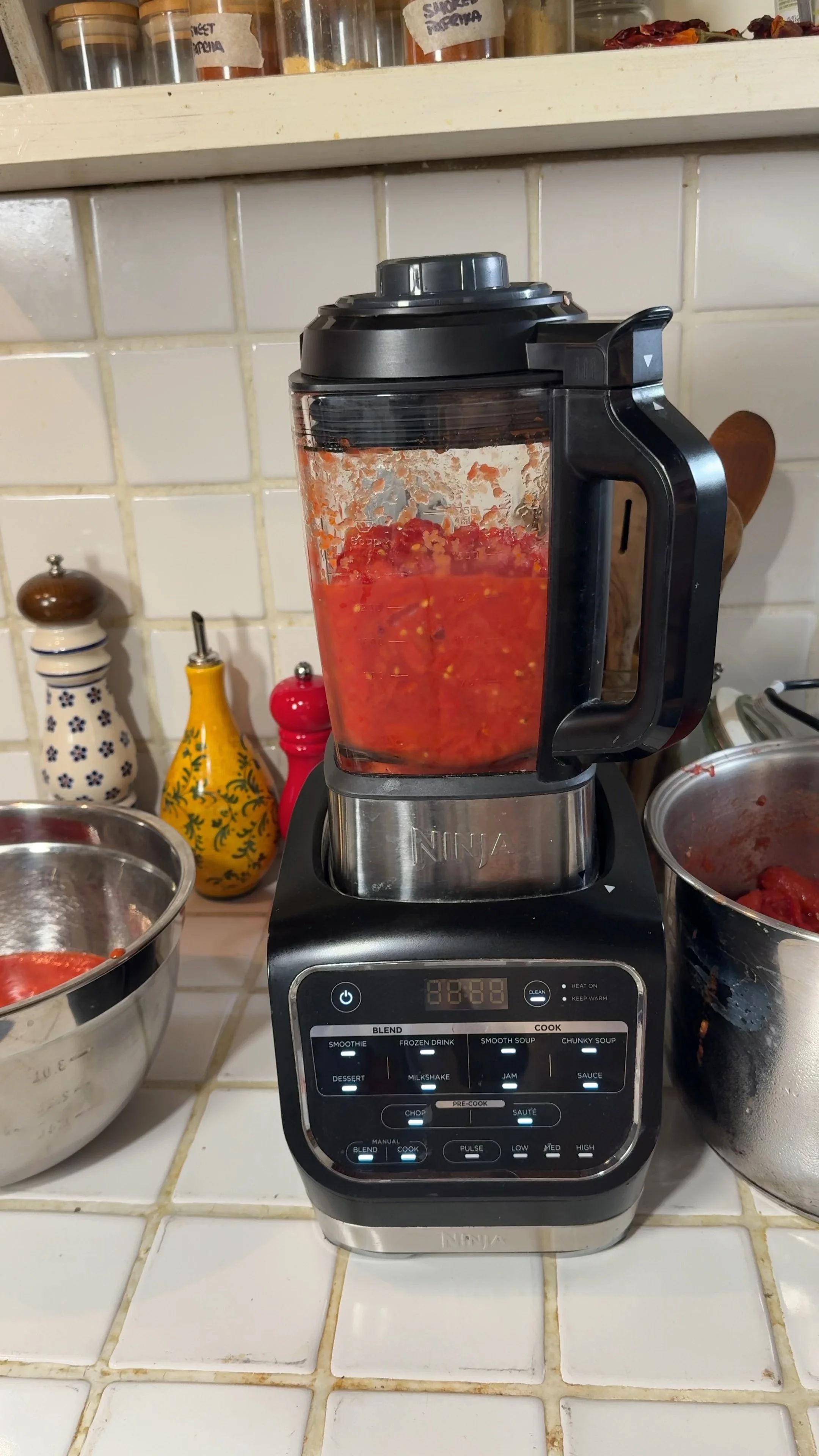
Everything slows down in Italy around Ferragosto and is also when I start making my passata. What is passata? Passata is made from fresh tomatoes during the Summer months. They’re typically skinned, and have seeds removed either by hand by blanching scored tomatoes, placed in ice water and removed by knife or passed through a food mill. I skip the removing of the skin and seeds because they add flavor and character to the sauce. Instead I use my Ninja that is able to break down the skin and seeds to keep all of these in the final flavor profile of whatever dish I make with my passata.
I moved to Florence because I was so obsessed with food I changed careers to become a chef. I have embraced the slow living here, and think what you eat is so important. One of the things I love about life here is the appreciation of simple in season ingredients, but beyond that simply, raw, quality ingredients that is called “materia prima”. A season only goes so long, so to preserve beyond the season we jar things whether they’re pickled, marinated in oil, jam, but with tomatoes they are simply preserved. I also love being close to the source of where ingredients come from, knowing what hands they have passed and having a short chain from where something comes from to being on the plate. I live in a really small one bedroom apartment in the center of Florence, no garden, no yard but I don’t let that stop me from making my passata jars.
Just a Few of the Varieties in Season During the Summer
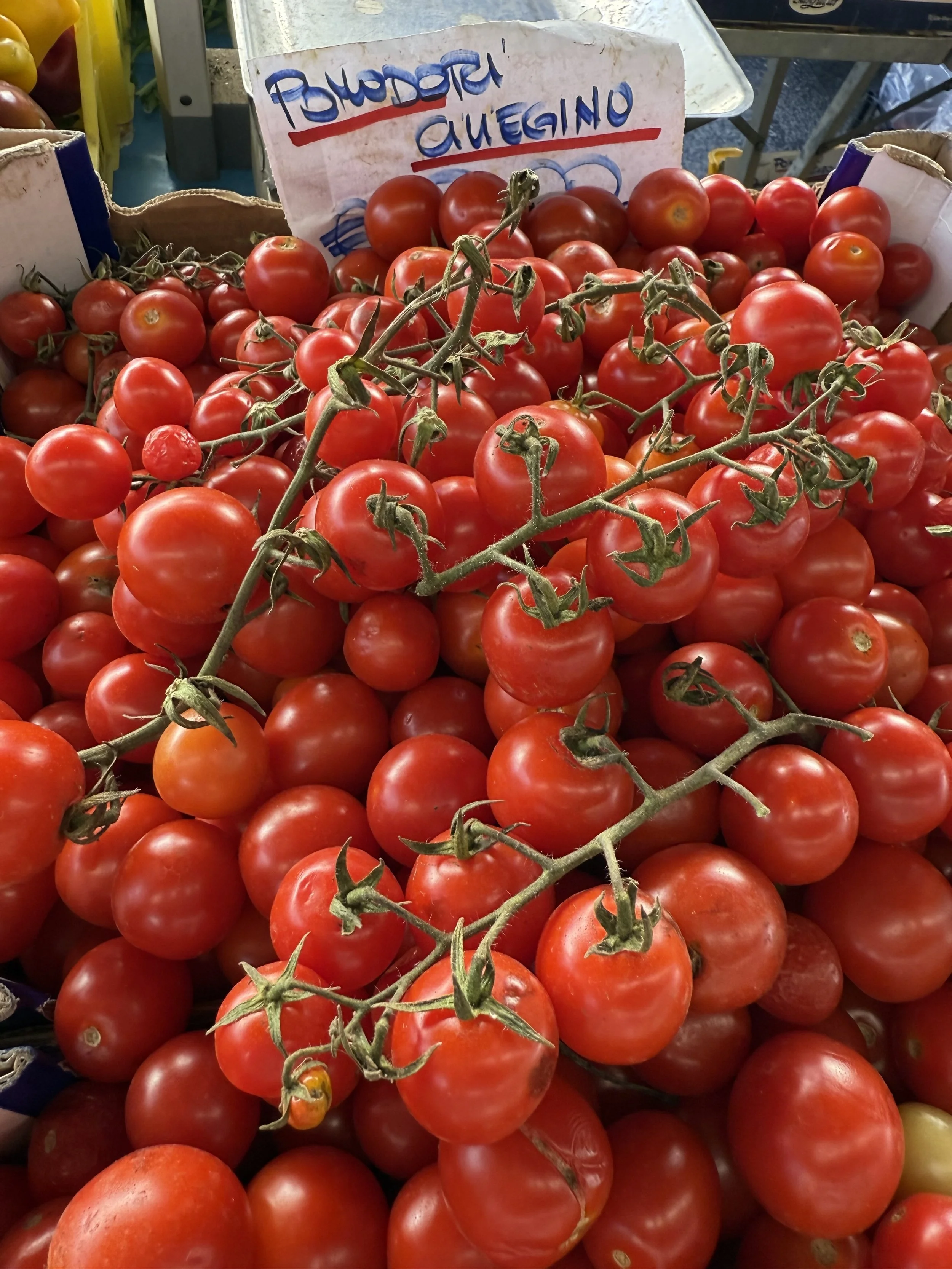
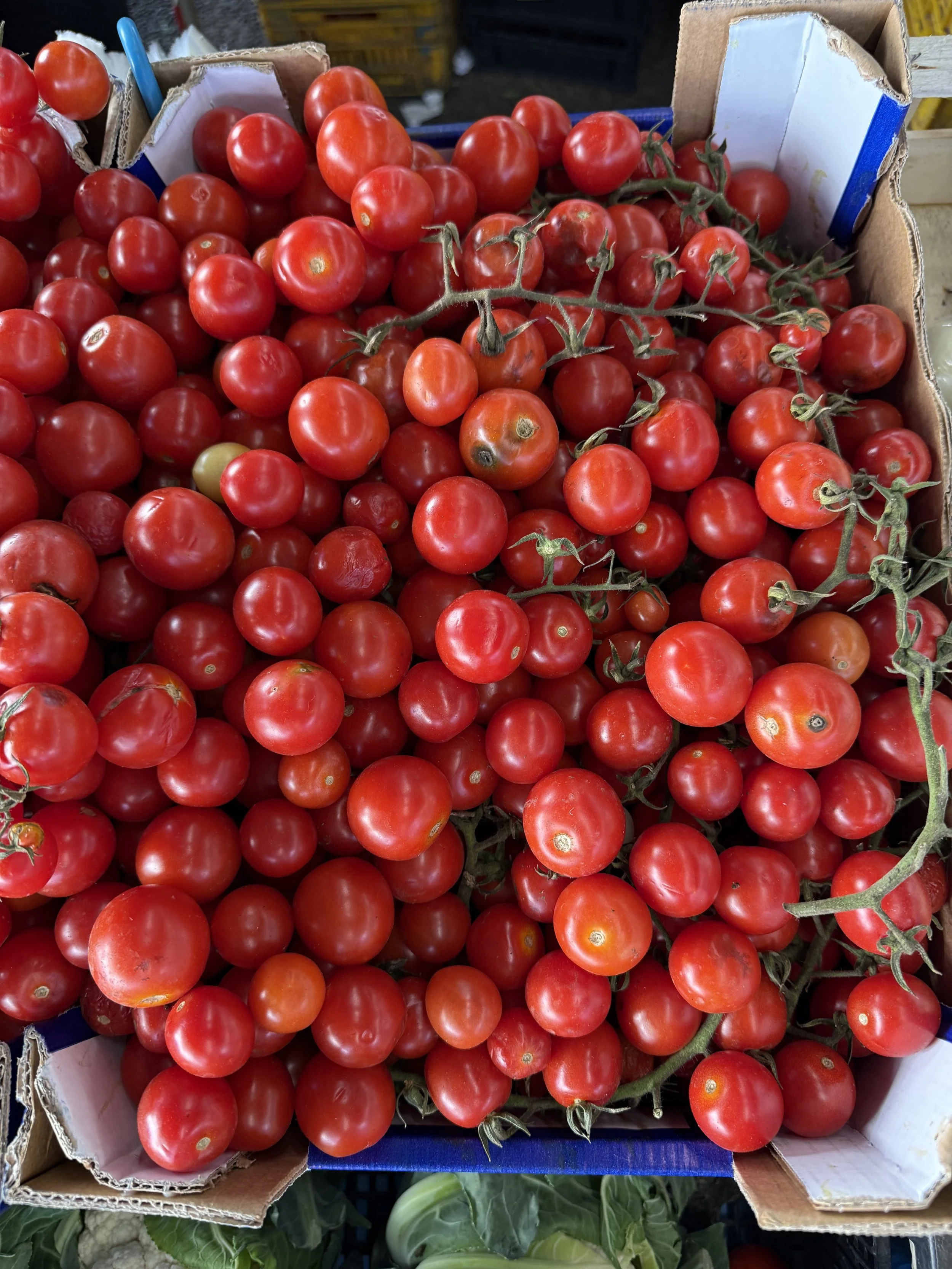
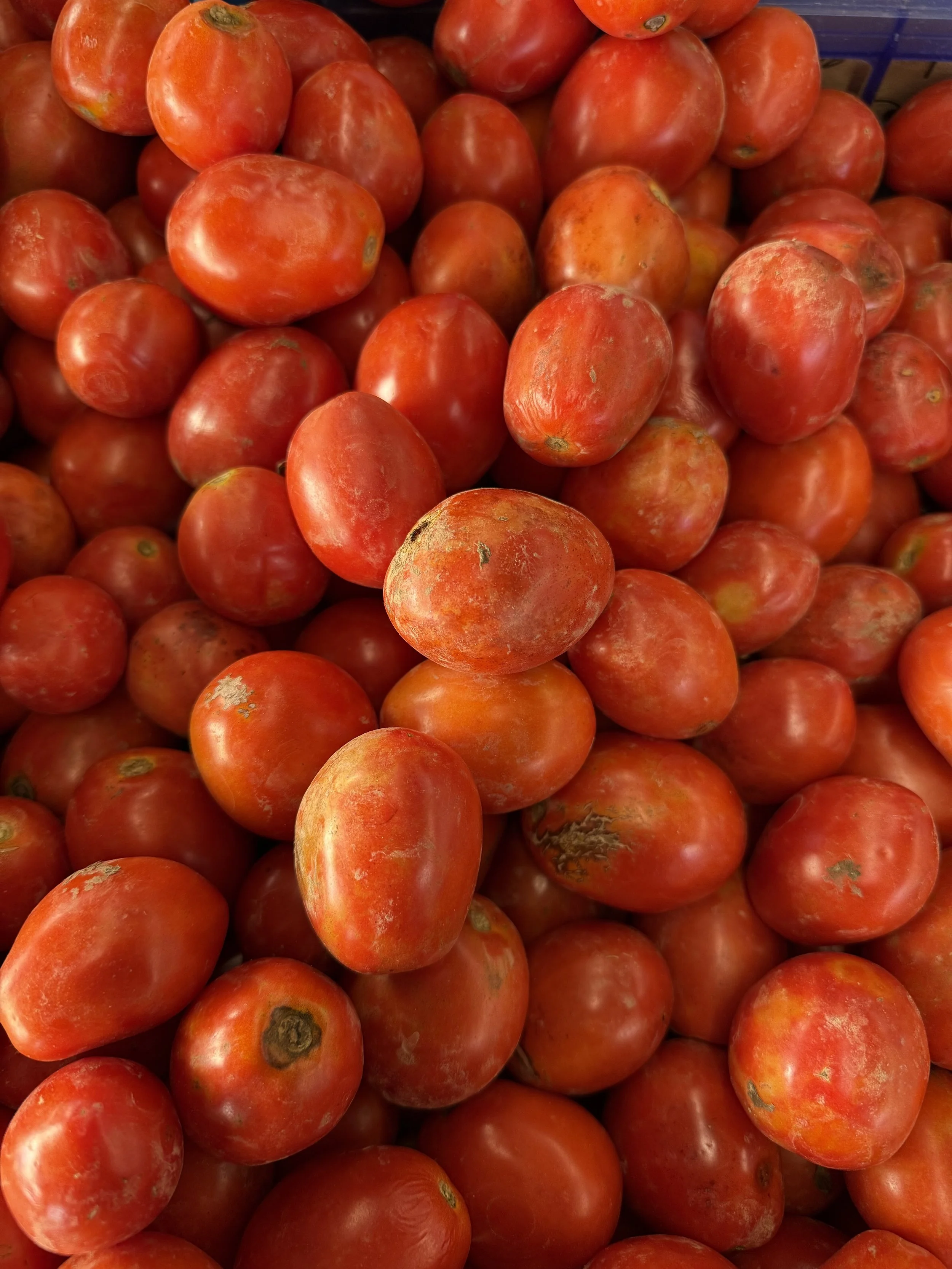
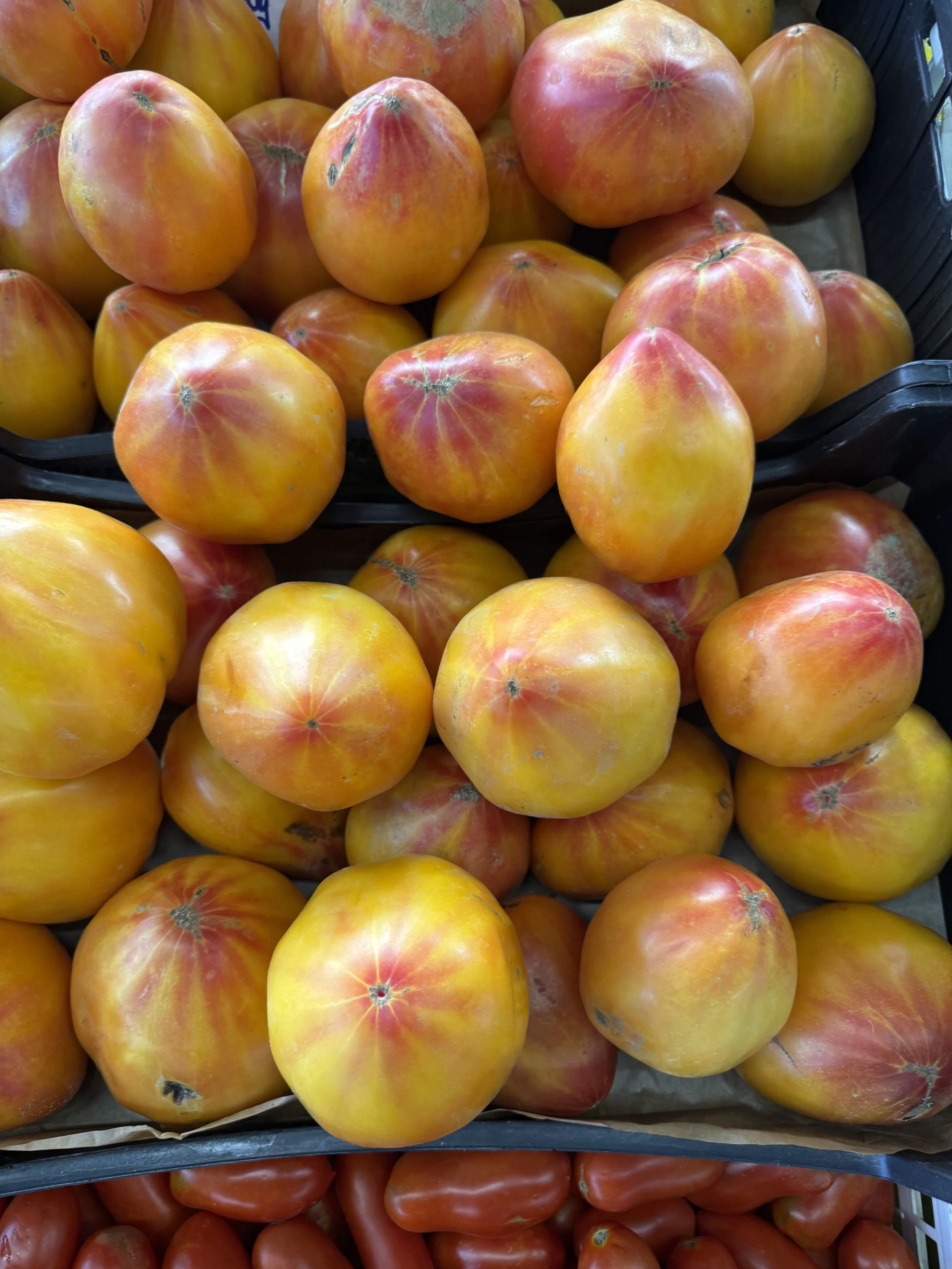
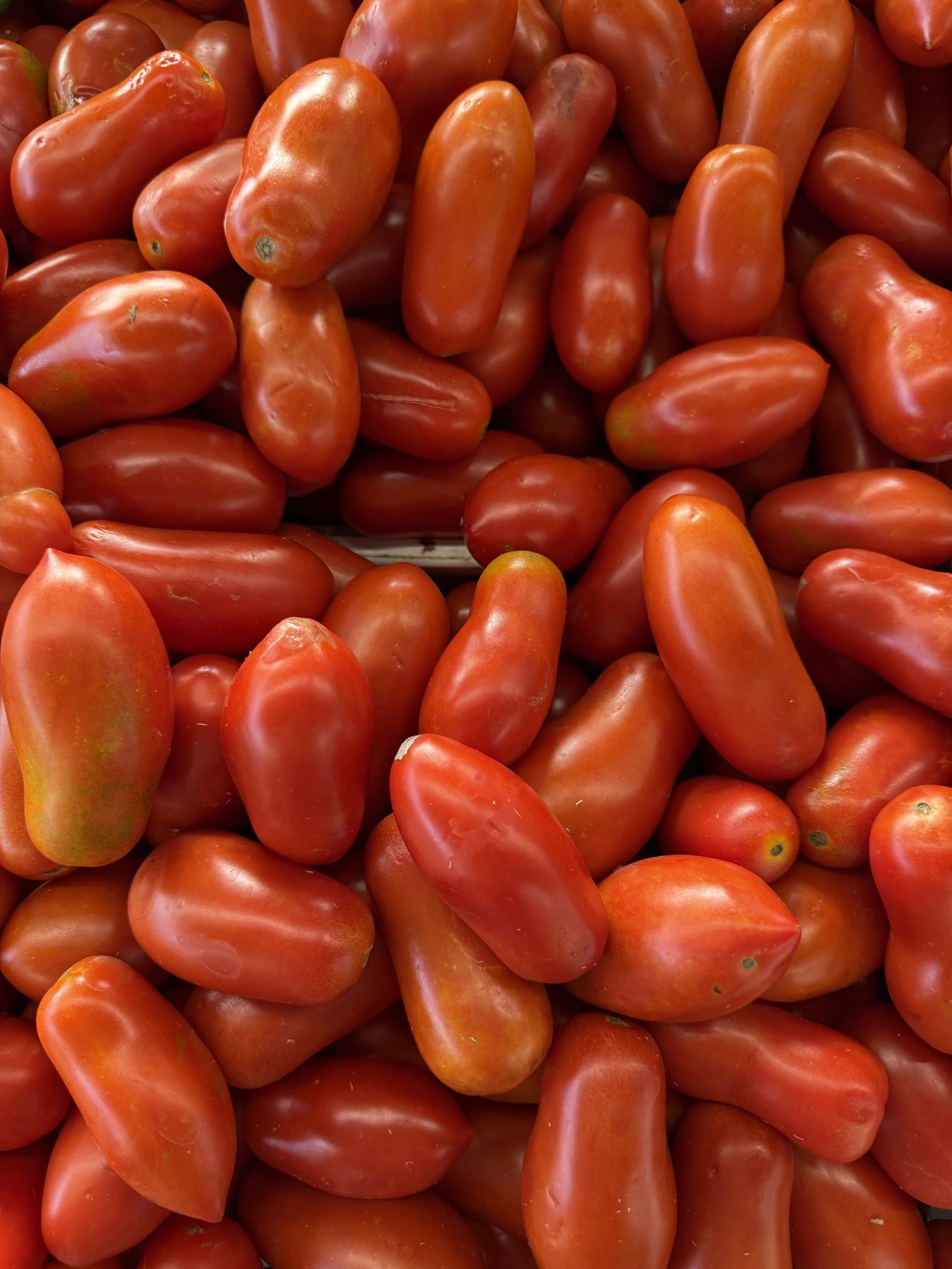
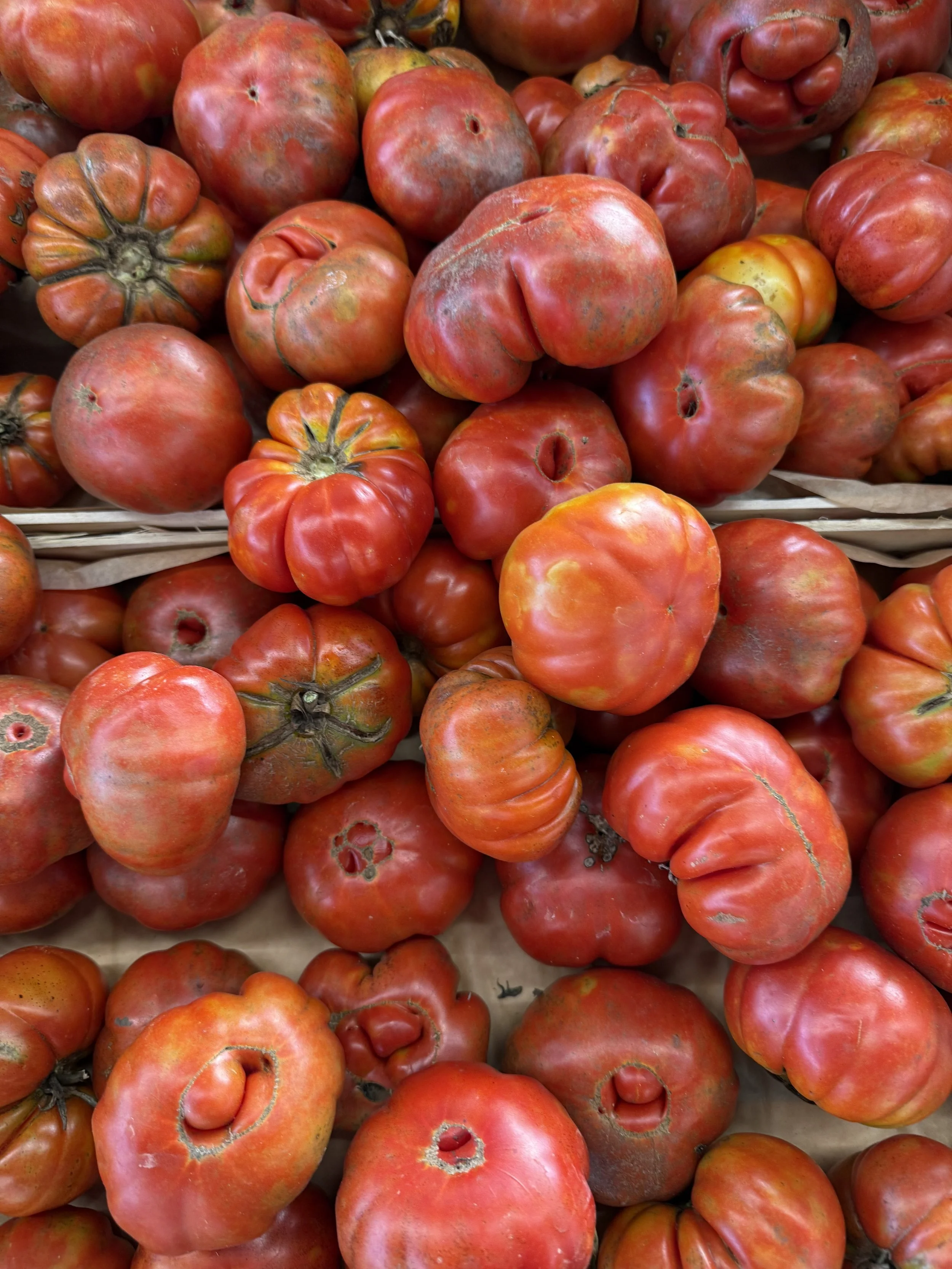
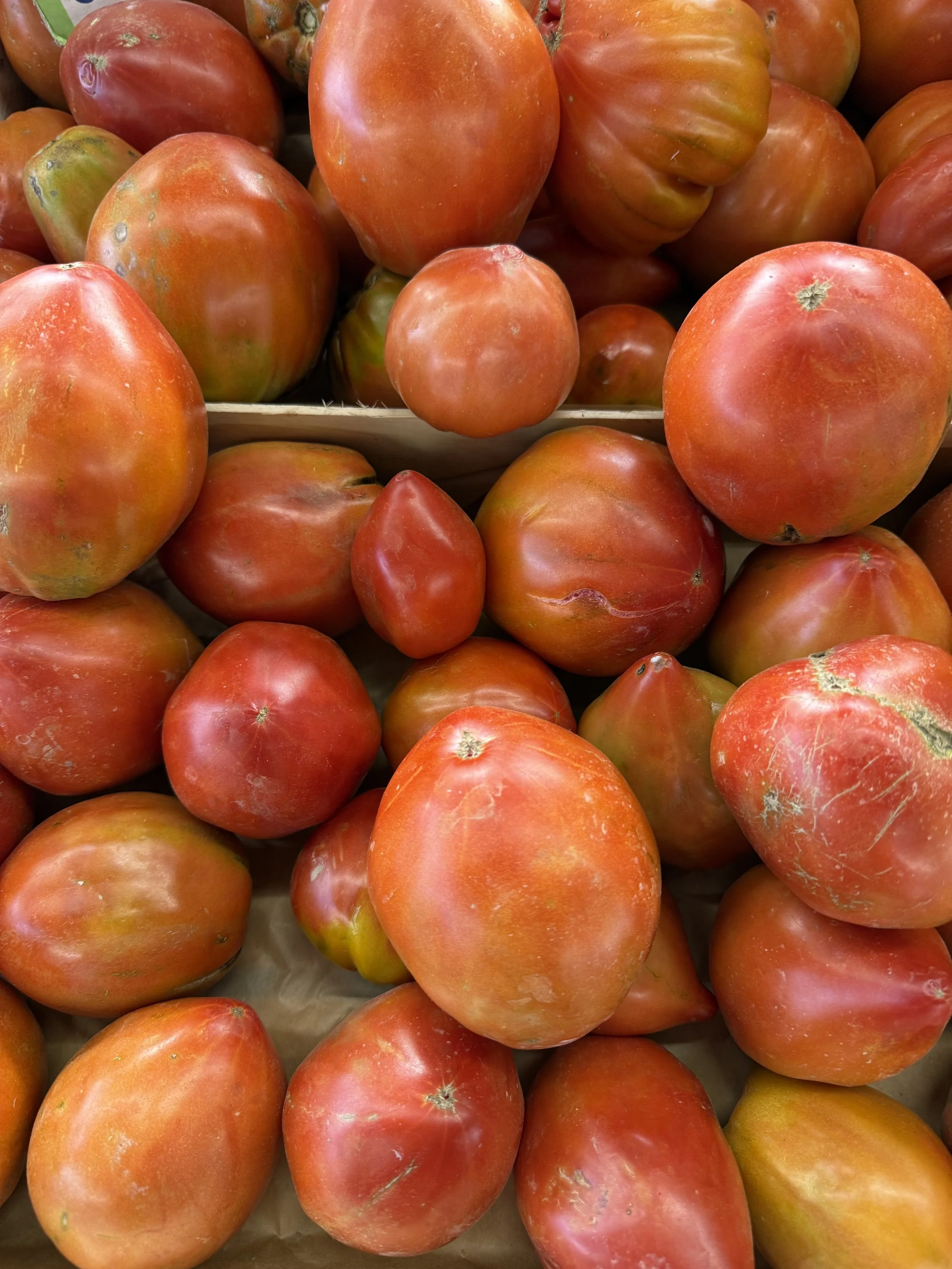
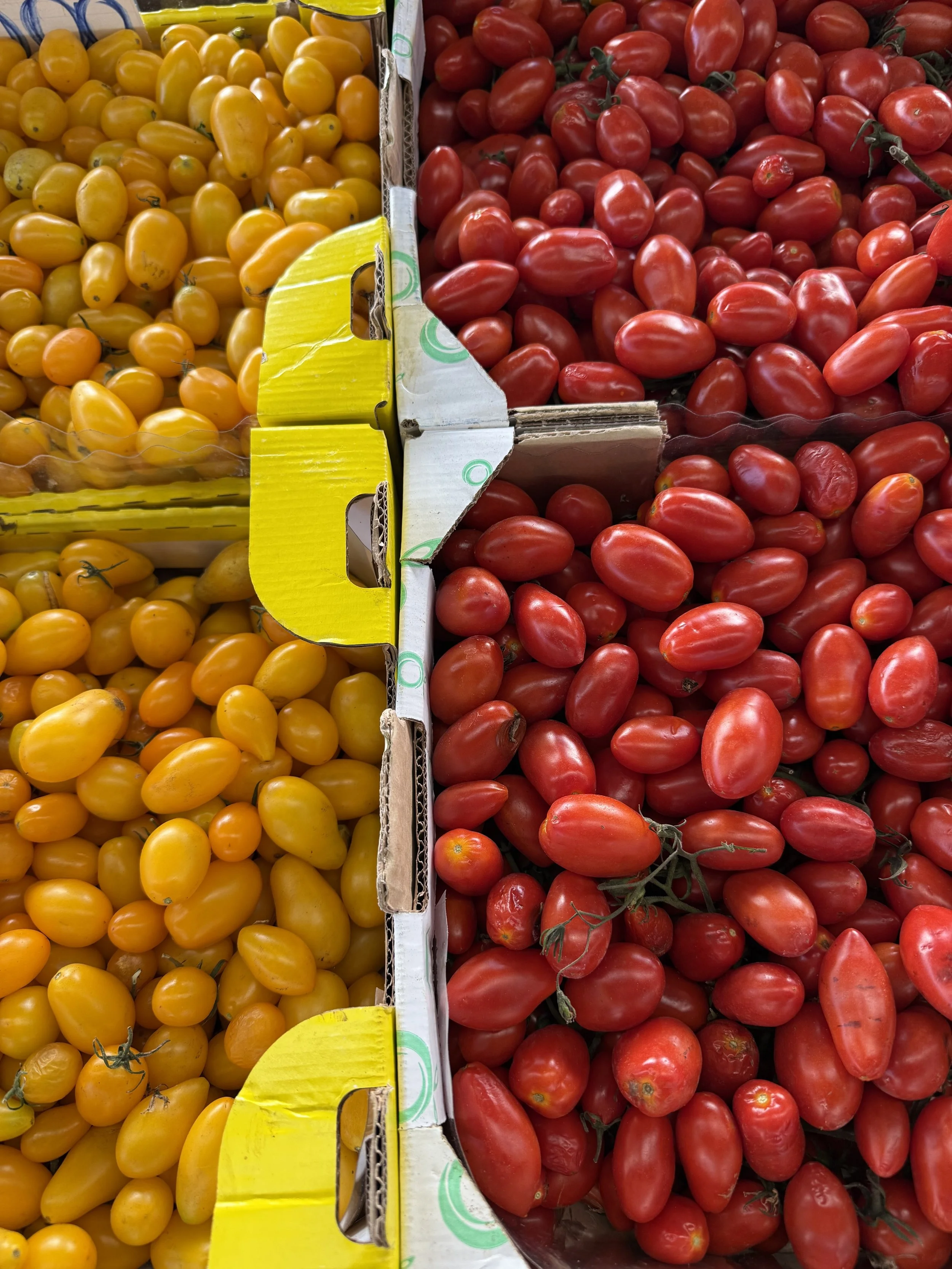
Since my kitchen is tiny, I can’t jar mountains of tomatoes in a single day, also because it’s just tiny team of me making these jars for my winter cooking and for my pasta making classes. What I usually do is that around Ferragosto I talk to my veggies guys/gals and tell them a few days in advance that I’d like a case of tomatoes for making passata. They take care of everything, I trust which tomatoes they select for my passata since they know which tomatoes are best. In the US, I remember people obsessing over San Marzano tomatoes or seeing recipes which require them. San Marzano tomatoes are really great tomatoes, the DOP ones grown specifically in San Marzano near Naples. If you’re not getting tomatoes labeled San Marzano DOP, of which the quantity is limited, you’re simply getting the variety of San Marzano grown elsewhere. They’re amazing tomatoes, so delicious and perfect for making sauce. They’re a plum shaped variety making them quite meaty, full of pulp and lower water content. They’re grown in a terroir of volcanic soil rich in minerals which adds so much character and flavor, and with lower water content have a higher yield for passata without much loss of volume. They’re really great! However, in Italy we use what’s local, seasonal, ripe and available today. In Tuscany, we make pomarola. Pomarola is a fresh tomato sauce made with a blend of tomatoes, that varies each time. It varies because we use tomatoes that are fresh, ripe, in season and available today. So when I make my passata, it variety of tomatoes is different for each batch based on all of these factors. I always note on the label of the jar of each batch, the date and which tomatoes I used. Whenever I open my jar of passata, usually in my pasta classes, people get this amazing aroma of Tuscan Summer in a bottle and then taste it with the some freshly made pasta with our own hands. It’s just magical. This is why I make my passata, to capture these beautiful flavors beyond the season, know where my ingredients are from and share them with family, friends and my classes. It makes every Sunday I spend in August so worth it for every second I spent jarring my tomatoes.
I’ll share the method I use, but because they are home preserved products there is could be a risk of botulism so please look up your local canning recommendations for safe & clean jarring process.
The first thing I do after getting the tomatoes is completely sanitize my kitchen, work areas and any utensils/tools I’ll be using. This is a very important step as we want to minimize any type of contamination in any step of the production process.
My Tomato Passata Method
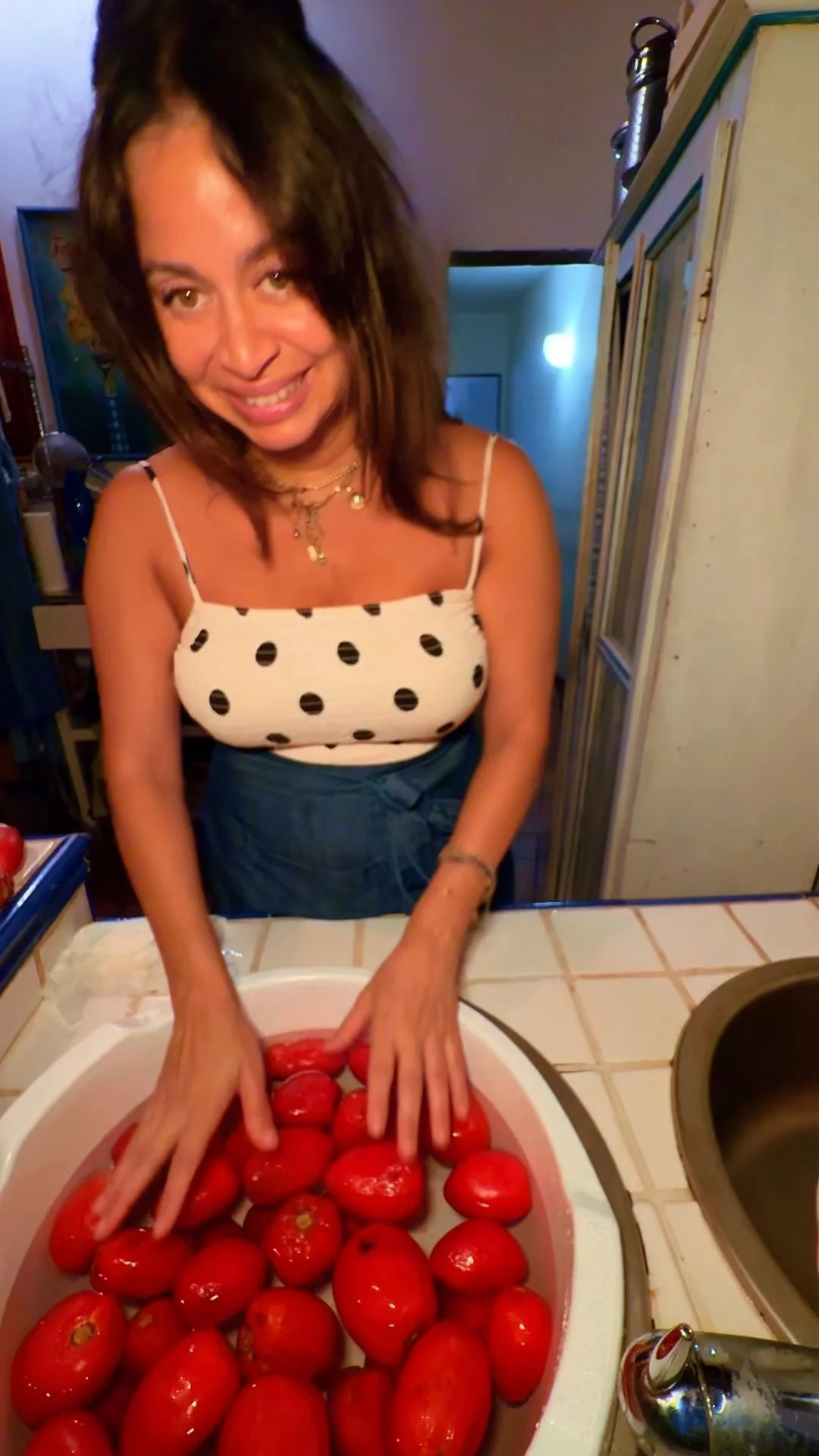
Properly wash the tomatoes at least three times
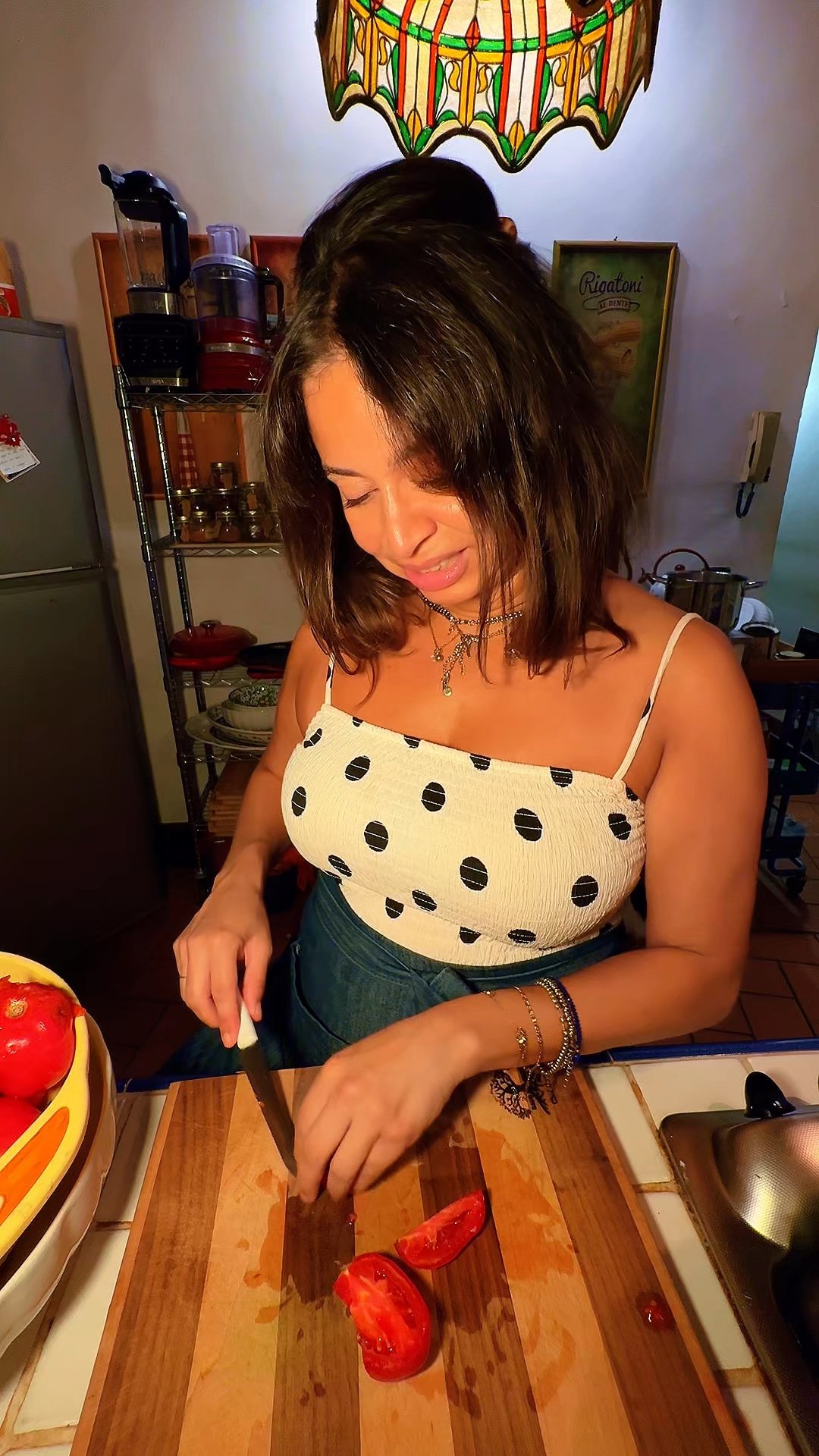
Cut the tomatoes in quarters, and examine the tomatoes for any bruising or parts that should be removed
The tomatoes are cooked with no oil, on medium heat. Initially the water starts to come out and should be stirred every few minutes so it doesn’t stick to the bottom of the pot. Once the water comes out they can simmer on low, stirring occasionally. The amount of time they cook depends on the quantity. When I’m working with small amounts of tomatoes like 1 kg for about 4 people they can take 25 minutes to cook but when I’m working on several kilos of tomatoes the cook time is closer to 40/45 minutes
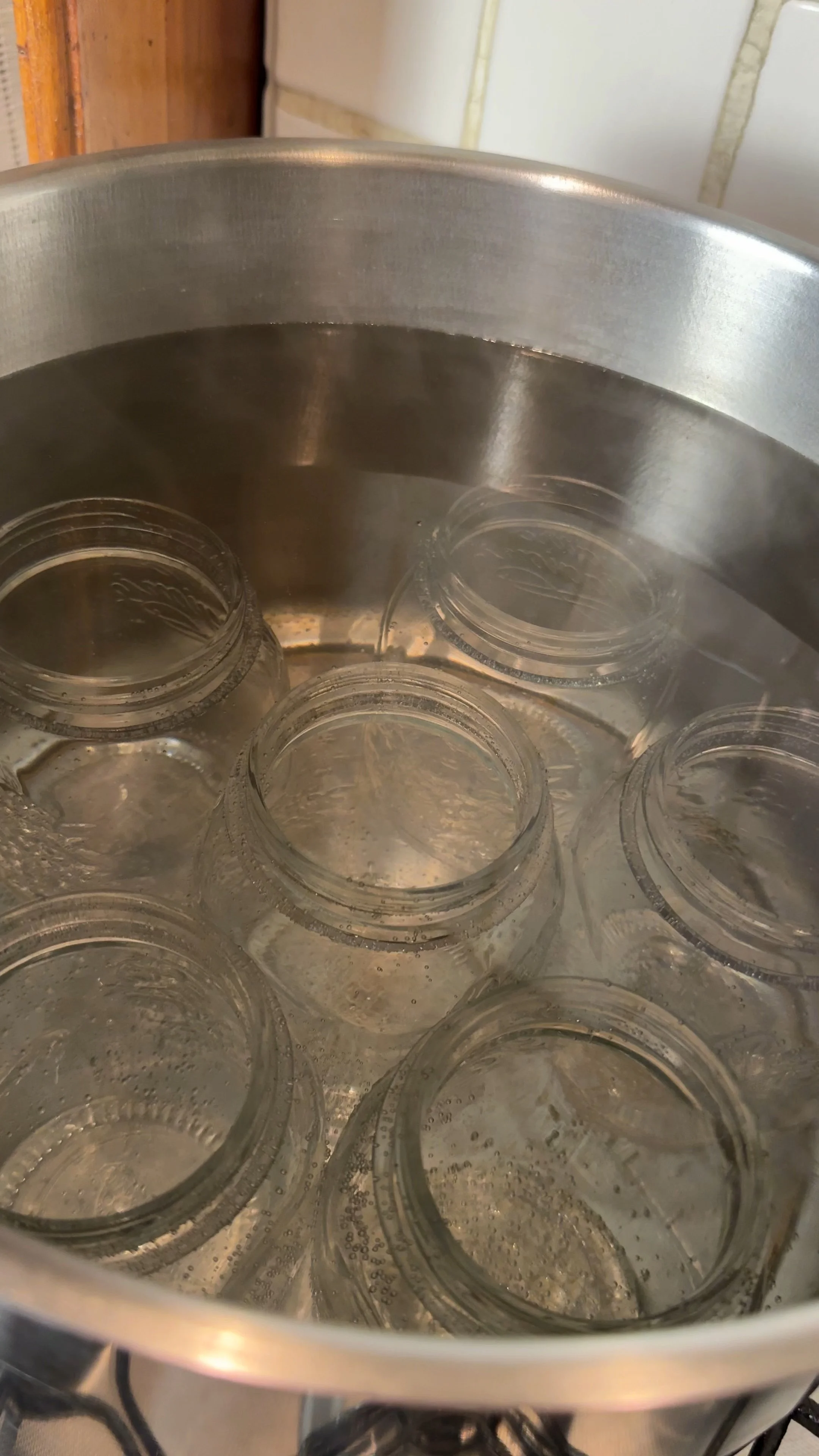
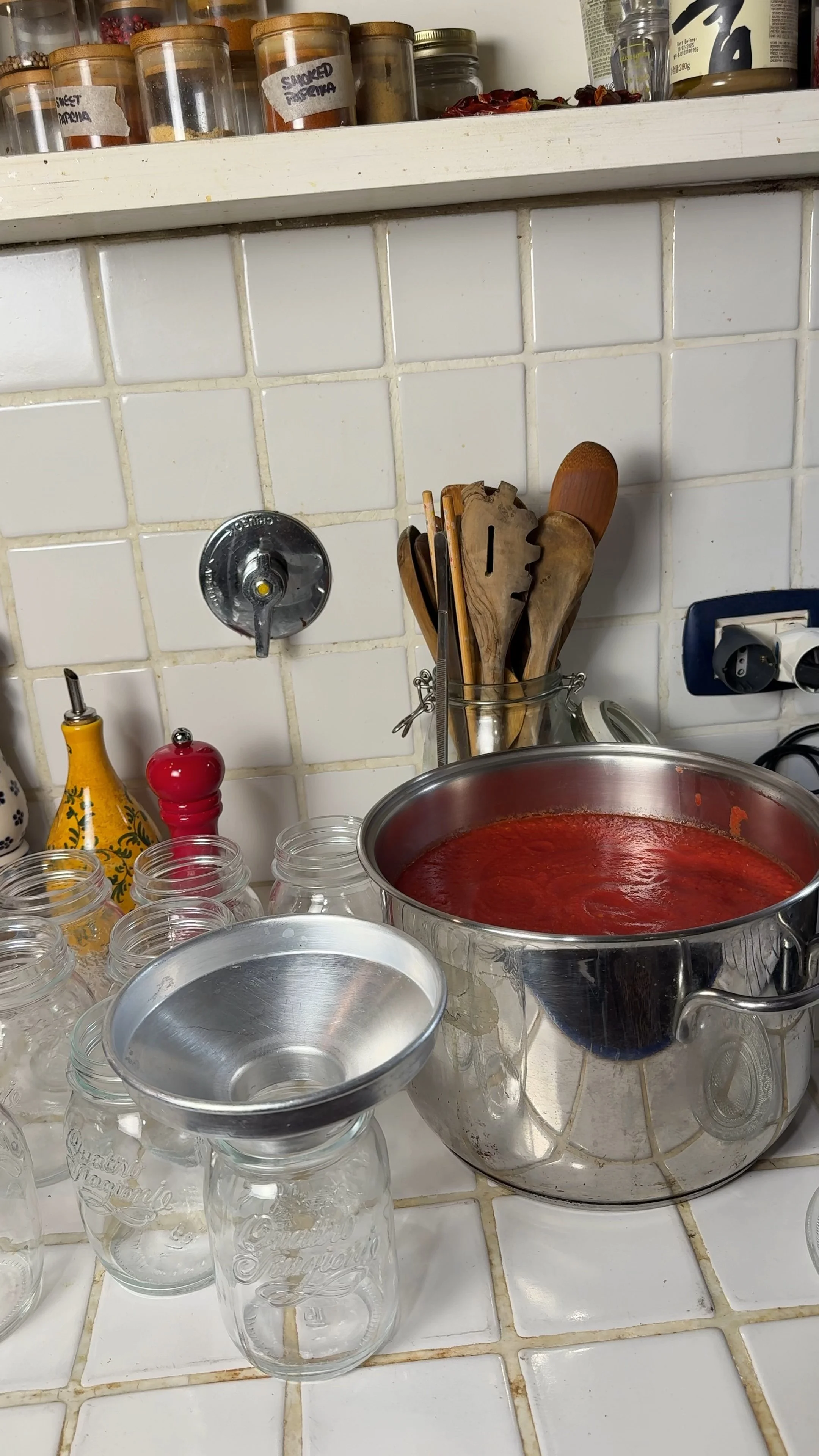
When they are cooling I start to sanitize the jars. The empty, uncovered jars are placed in a pot fully submerged in water and placed to boil. From the moment the water starts boiling you start counting the 10 minutes. Once the 10 minutes have passed you shut off the flame. I carefully remove them with a jar holder, dry them really well.
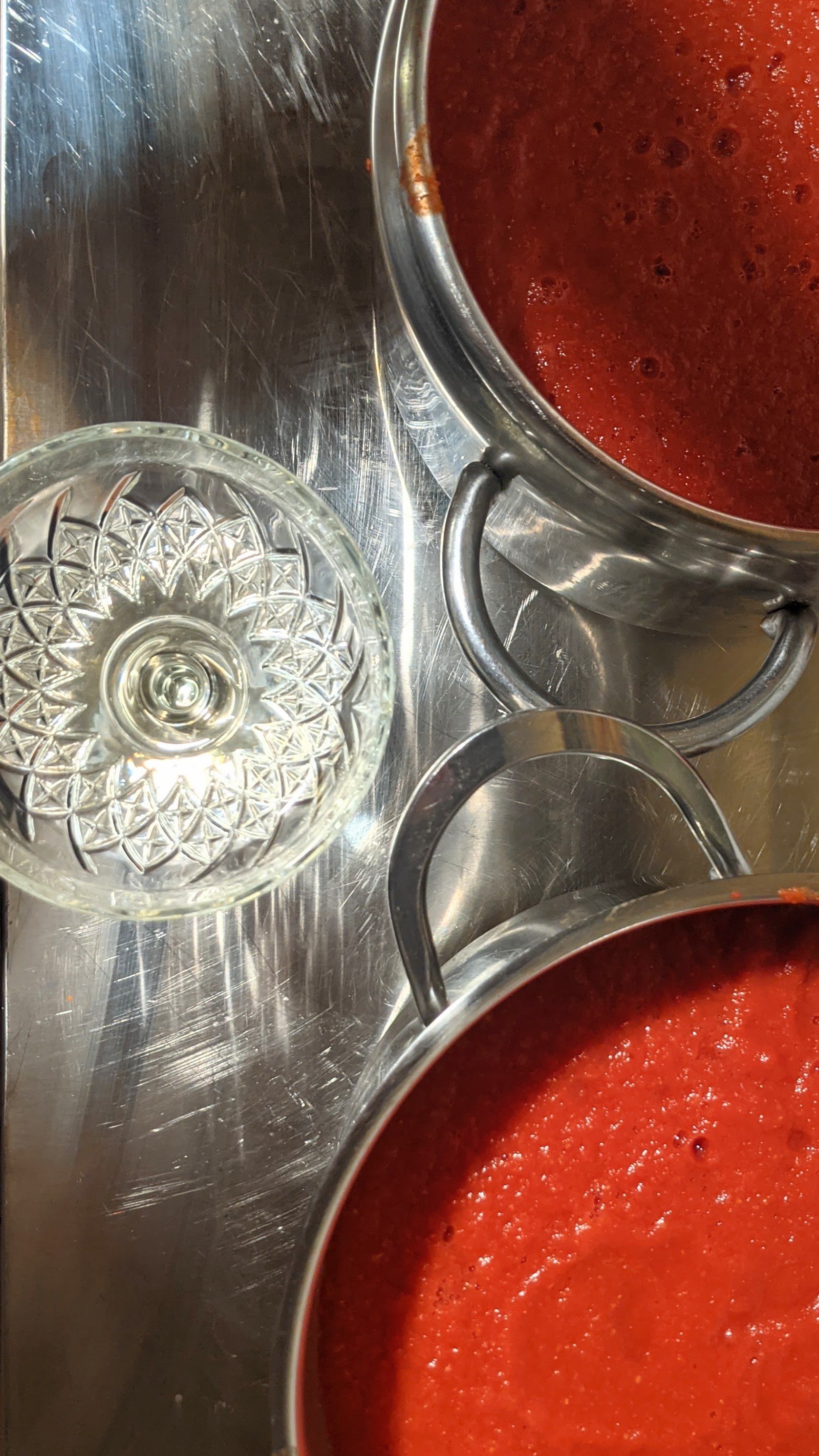
As soon as the jars are ready I blend my tomatoes. The traditional method is using a food mill called a passaverdura so that the skin and seeds are separated from the pulp. I use my Ninja blender which I find to be a much easier process, and the Ninja is able to break down skin and seeds. I like a variety of texture in my passata and blend a third of it fully, the other remaining two thirds I stop half way through so that it’s slightly chunky vs a smooth puree. I mix all the tomatoes together and start to fill the jars.
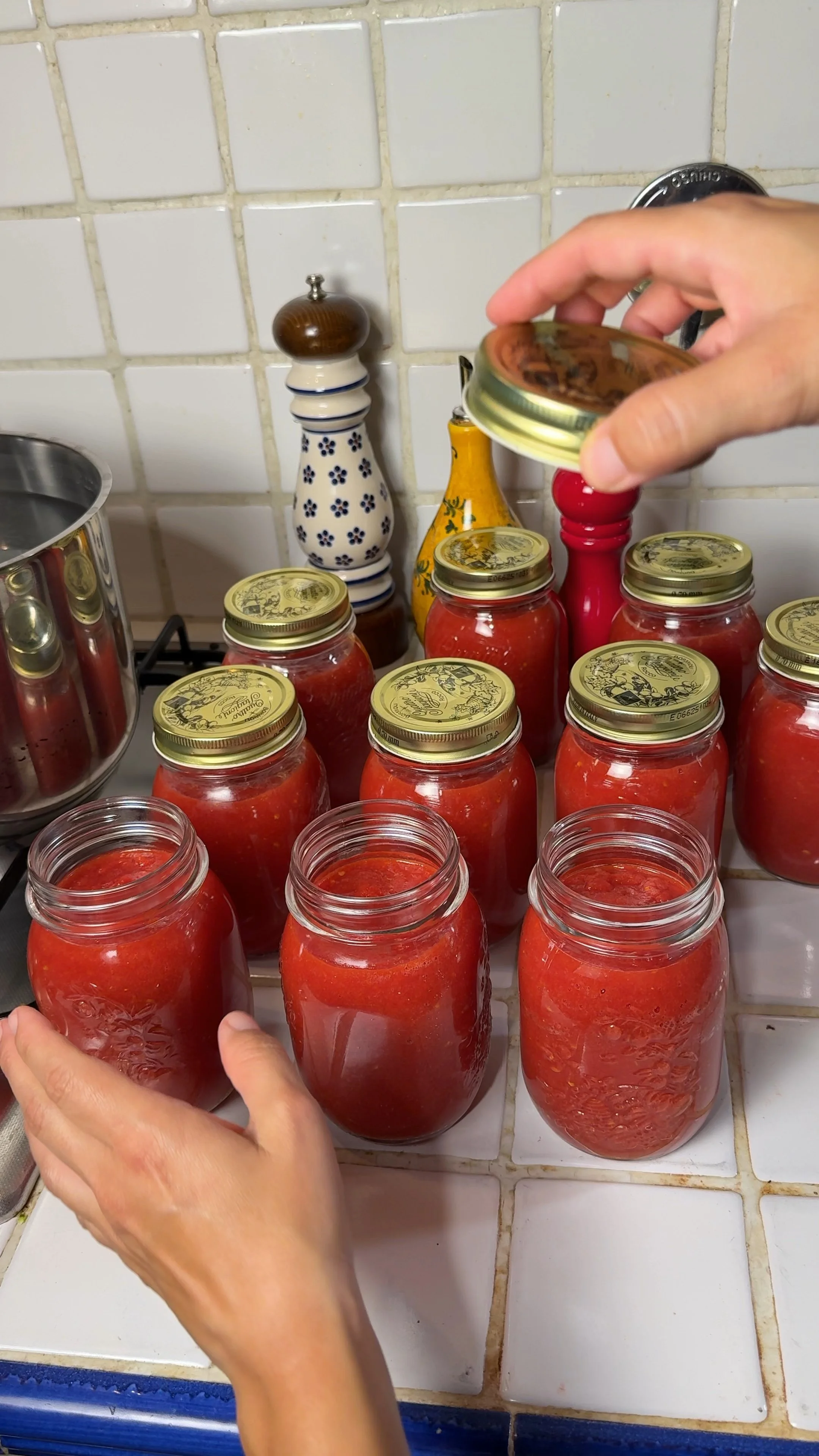
Some fresh basil leaves are placed in each jar, I add the blended tomatoes leaving some space at the top. Before closing I take a paper towel that is damp with some apple cider vinegar and I clean the top rim of the jars if they got dirty while filling the jars. Then I quickly wash brand new lids with some soap and water, dry them really well and close each jar with a lid.
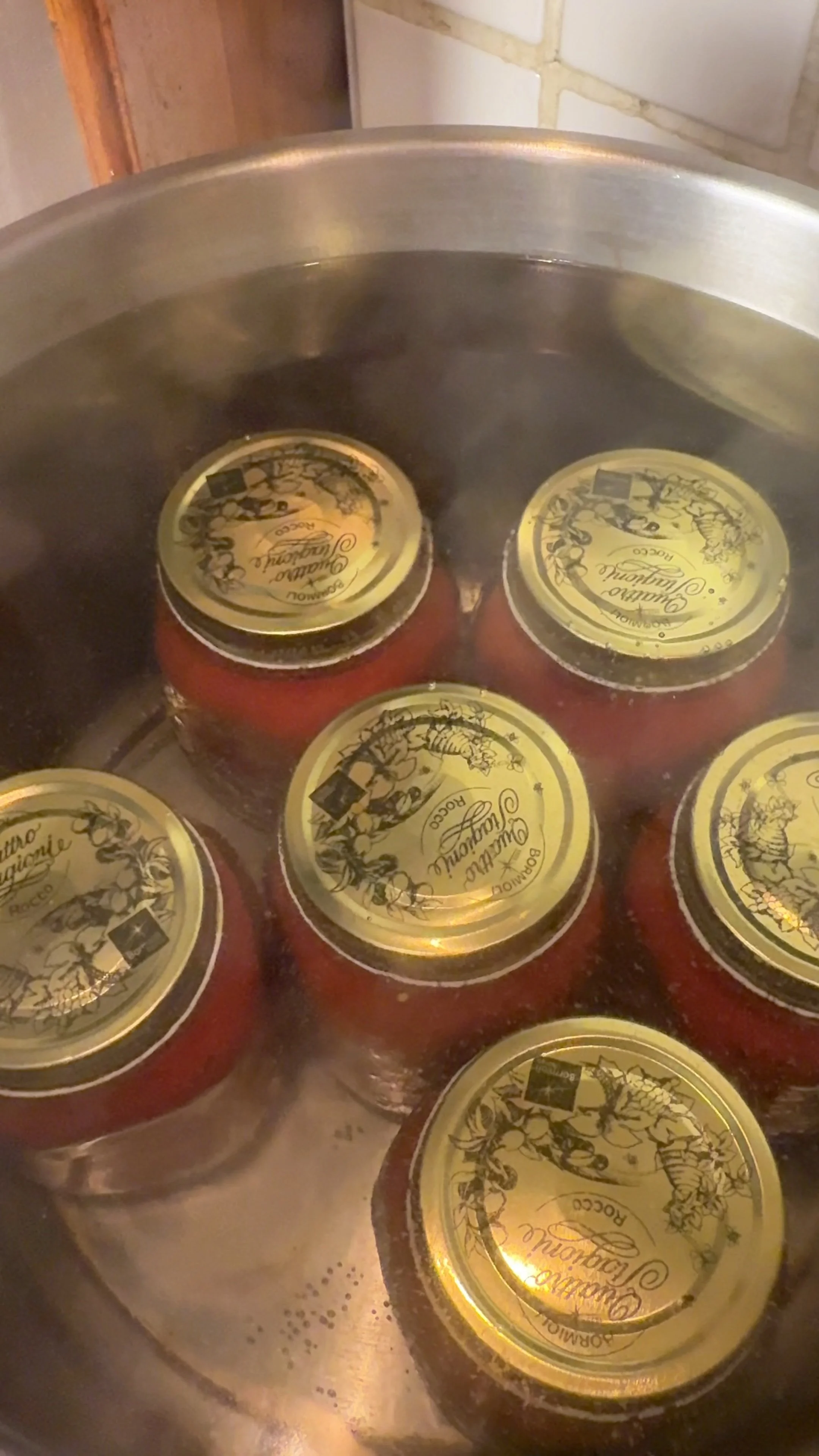
The closed jars are placed in a pot of water and submerged completely. The jars boil for about 40 minutes, and then I shut off the heat, leaving the jars in the pot and let the vacuum seal process continue.
Once the jars are vacuum sealed I remove them from the water, dry them really well and label them with the blend of tomatoes I made, as well as the date they were processed. Then I store them away to use in the winter for what I like to cook or for my pasta classes.
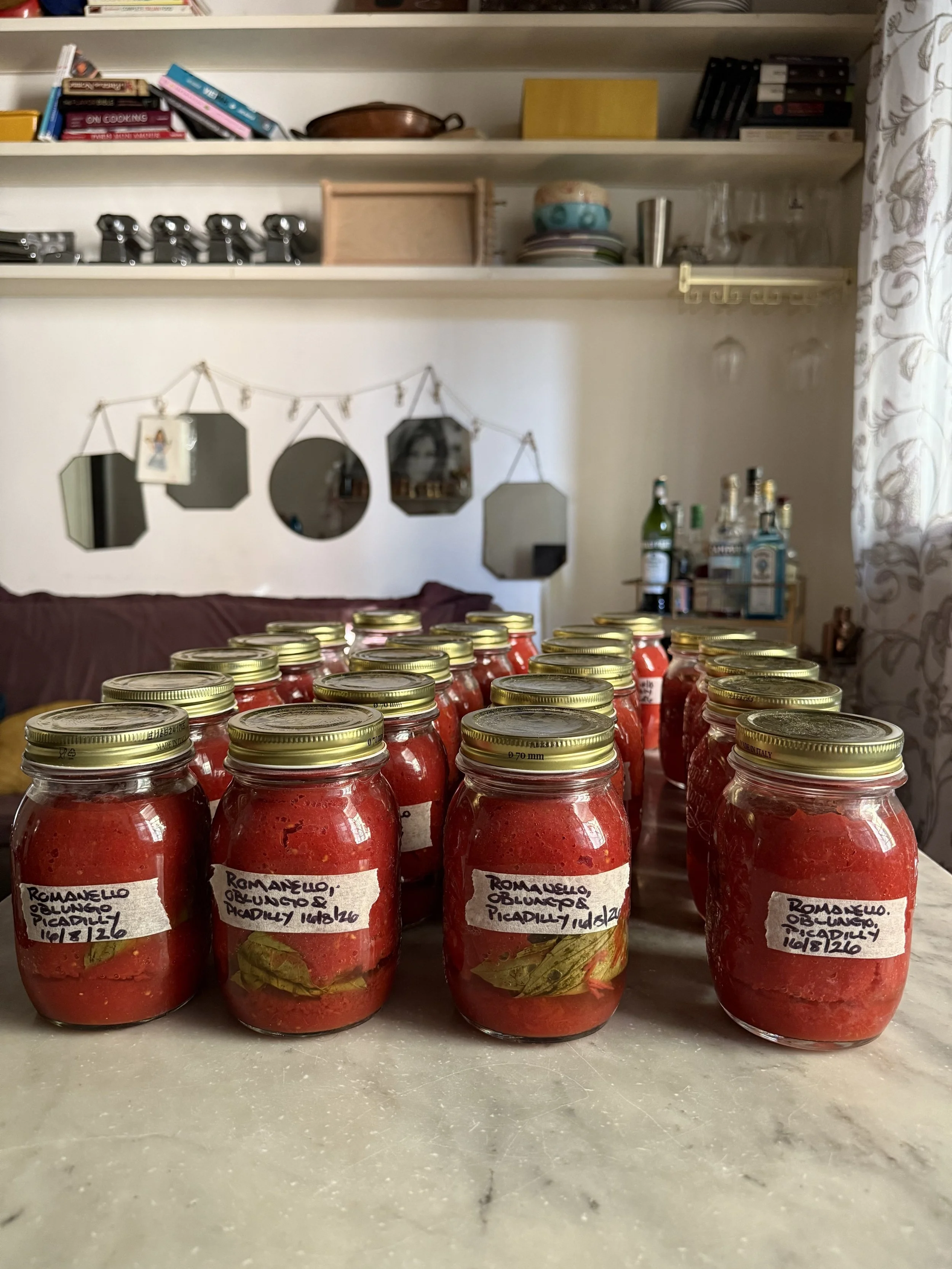
I’m often asked during my pasta classes how I make my passata jars, and I wanted to share with you all in case you find it interesting too….hope you enjoy seeing the process. I wrote this in August, but I’m posting this end of September. Closing the Summer season officially, and getting ready for some Fall recipes! And if there is a day in the Fall or Winter where I want to make something with tomatoes, I can easily grab one of my jars for a taste of Tuscan Summer in a jar! Look forward to some Fall cooking!
